


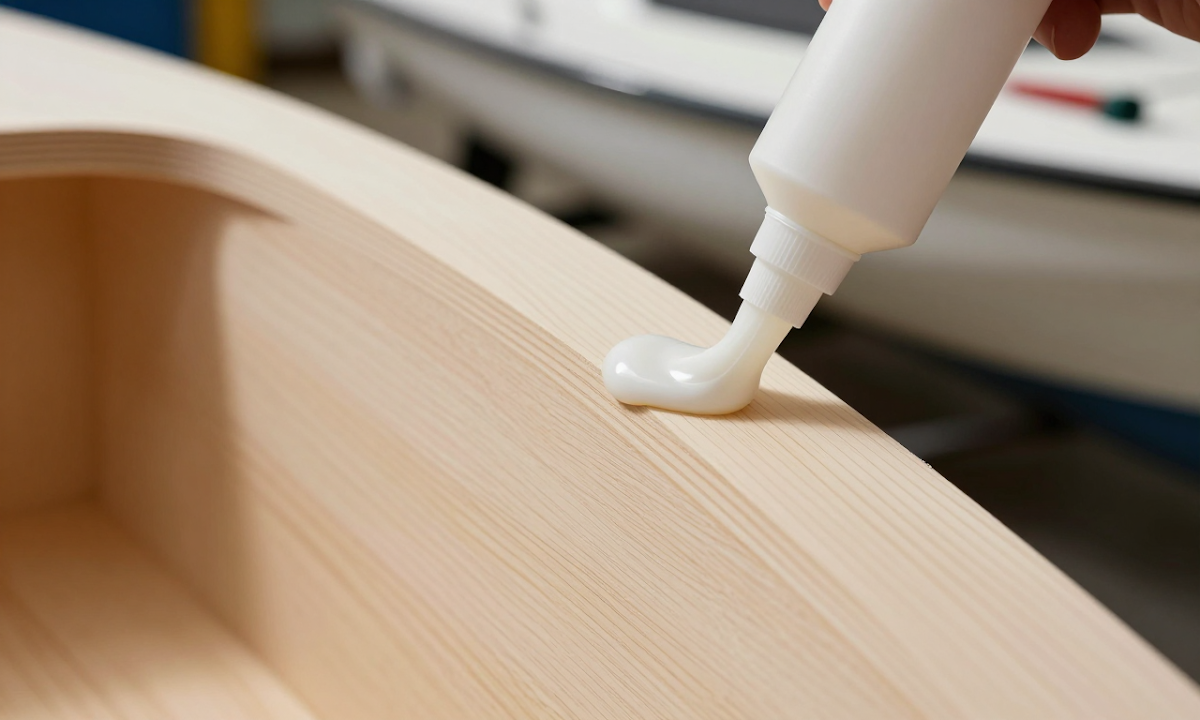
When you lay out the first curve of your boat's hull, selecting the right adhesive is critical for long-term performance. Many builders turn to marine plywood glue alternatives when traditional contact cement fails to provide the flexibility needed for complex shapes.
You will learn how to match specific adhesive properties with your construction needs, ensuring a durable bond that withstands saltwater exposure and structural stress. By understanding the advantages and limitations of each marine construction adhesive type, you can confidently choose materials that enhance the integrity of every curved panel without compromising on ease of application.
In this article:
- Understanding Bonding Needs for Curved Hull Sections
- Flexible Epoxy Resins as Primary Alternatives
- Water-Resistant Wood Glues for Curved Panels
- Applying Adhesives to Complex Geometries
- Common Mistakes in Marine Plywood Glue Selection
- Final Thoughts
Understanding Bonding Needs for Curved Hull Sections
Curved hull sections present unique bonding challenges that differ significantly from flat surfaces due to constant stress points along the radius of the curve. The primary requirement for these areas is high flexibility, as the boat flexes with waves and engine vibration while maintaining a sealed perimeter. A rigid adhesive will crack under this movement, compromising the waterproof integrity of the entire vessel over time.
Stress Points and Flexibility
The outer edge of any curved panel experiences tension while the inner edge undergoes compression during flexing. This creates a dynamic stress point that demands an adhesive capable of stretching without breaking the chemical bond to the wood fibers. Standard construction adhesives often lack this elasticity, leading to micro-cracks that allow water ingress.
- Tension Zones - The outside curve stretches, requiring glue with high tensile strength and some give.
- Compression Zones - The inside curve squeezes, needing an adhesive that resists crushing without losing adhesion.
Selecting a marine construction adhesive specifically formulated for flexible bonding is essential. These products maintain their structural properties even when bent slightly around tight radii. Without this specific flexibility requirement met by the chosen material, long-term durability of the curved hull section will decline rapidly.
Water Exposure Challenges
The constant immersion in saltwater or freshwater introduces continuous moisture that degrades weaker adhesive bonds faster than dry conditions. Water exposure challenges require an adhesive with excellent hydrolysis resistance to prevent softening or delamination after months of service. Saltwater environments are particularly aggressive, accelerating the breakdown of organic binders found in some water-resistant wood glues.
- Salt Corrosion - Chlorides attack certain polymer chains, demanding high chemical resistance from the adhesive.
- Cyclic Wetting - Repeated soaking and drying cycles cause expansion and contraction that stress the bond line constantly.
Adequate bonding strength must persist even after prolonged saturation. The adhesive should not release moisture-absorbing components into the wood, which could rot the plywood core from within. Balancing these three factors—stress management, flexibility, and water resistance—is critical for successful curved panel bonding in marine applications.
Flexible Epoxy Resins as Primary Alternatives
Standard wood glues often fail when applied to curved hull sections because they lack the necessary elasticity to accommodate the continuous stress of bending. As a boat shell flexes under water pressure, rigid adhesives can crack or delaminate over time, compromising structural integrity. Flexible epoxy resin addresses this limitation by offering high tensile strength while maintaining enough give to move with the wood without breaking the bond.
Movement Tolerance and Durability
The primary advantage of flexible epoxy resin is its ability to stretch slightly under dynamic loads, which is critical for curved panel bonding. This material bridges small gaps that may exist between plywood layers or at the edges of a hull section, ensuring a tight seal against water infiltration.
- High bond strength that rivals or exceeds traditional resins in marine construction adhesives applications.
- Superior resistance to UV degradation and prolonged moisture exposure compared to standard wood glues.
- Ability to remain flexible after curing, preventing stress fractures on tight curves.
When selecting a boat hull adhesive for complex geometries, flexible epoxy resin provides a reliable solution that balances rigidity with elasticity. It creates a robust connection that can withstand the constant flexing of a vessel without losing its grip, making it an essential choice for high-stress areas like the stem or transom.
Application requires careful surface preparation to ensure maximum adhesion, especially since epoxy does not self-level as easily as some other marine construction adhesives. Despite this, once cured properly, the resulting bond offers exceptional longevity and performance in demanding seawater environments.
Water-Resistant Wood Glues for Curved Panels
Water-resistant wood glues are a practical choice when constructing curved panels that require only mild bends, such as gentle fairing on small boats or simple cabinetry components. These adhesives offer a cost-effective solution for projects where extreme flexibility is not critical, making them accessible to hobbyists and DIY builders working with limited budgets.
Types Suitable for Mild Bends
The most common type suitable for mild bends is phenolic-resorcinol glue, which provides high strength and excellent water resistance. Another option is polyurethane-based adhesives that expand slightly during curing to fill small gaps between plies, though they require careful handling due to their exothermic nature.
These glues work best on curves with a relatively large radius, where the wood fibers do not need to stretch significantly. They are ideal for applications involving flat-to-slight-arched sections like transom supports or bulkheads that transition smoothly into curved areas without sharp angles.
Limitations and Considerations
A primary limitation of water-resistant wood glues is their reduced elasticity compared to flexible epoxy resins. When the panel bends beyond a certain threshold, these adhesives may crack or lose bond strength because they cannot stretch with the moving wood fibers.
Additionally, phenolic-resorcinol glue can become brittle over time if exposed to prolonged moisture cycles without proper sealing. Polyurethane glues may also absorb too much moisture from the environment, leading to premature softening or failure in high-humidity marine environments unless sealed thoroughly after application.
Proper Application Techniques
- Surface Preparation - Ensure all mating surfaces are clean, dry, and free of old glue residue before applying any adhesive.
- Bead Sizing - Apply a thin, even bead along the joint line. Avoid thick layers that can trap air bubbles or cause uneven clamping pressure on curved sections.
- Clamping Strategy - Use flexible clamps or custom jigs to maintain consistent pressure around the curve. Allow sufficient open time for the glue to penetrate into the wood pores before finalizing the clamp setup.
- Curing Time - Let the adhesive cure fully according to manufacturer specifications, keeping the panel under tension-free conditions until completely hardened.
When used correctly within their intended range of motion, water-resistant glues provide reliable bonding for less demanding curved hull sections. They serve as a viable alternative when full flexibility is not required and budget constraints limit the use of more expensive epoxy systems.
Applying Adhesives to Complex Geometries
Applying adhesives to curved surfaces requires a methodical approach to ensure a strong, durable bond without creating weak spots that could lead to future failure.
Preparation and Layout
Before applying any adhesive, carefully align the two hull sections so they meet at the exact curve required. Use temporary clamps or bungee cords to hold the pieces in position while you prepare the bond line. Ensure both surfaces are clean, dry, and free of dust or debris that could interfere with adhesion.
Lay out your adhesive in a thin, even layer across the contact area. For flexible epoxy resins, this means spreading it thinly to allow penetration into the wood grain without creating thick globs that might push out during clamping. A notched trowel or a stiff brush can help achieve uniform coverage on non-flat joints.
Clamping Techniques for Curved Surfaces
Standard flat clamps often struggle to maintain pressure along the entire length of a curved joint, so specialized tools are necessary. Consider using cam clamps, C-clamps with adjustable pads, or custom-made wooden blocks that follow the hull's contour. These allow you to apply consistent pressure across the bond line even as the wood compresses slightly under load.
Arrange your clamps in a zigzag pattern rather than placing them all at once ends-first. This distributes stress evenly and prevents twisting or warping of the panel during curing. Secure the assembly firmly enough to prevent movement but not so tightly that the adhesive squeezes out excessively, which can create voids.
Managing Excess Adhesive
- Squeeze Out Control- As you clamp the joint, excess adhesive will naturally push to the surface. Wipe it away immediately with a clean cloth or paper towel while the material is still wet. Avoid letting thick layers dry on the hull, as they can trap air bubbles and weaken the outer skin.
- Tool Selection- Use a plastic scraper or putty knife made specifically for marine applications to remove residue without scratching the wood finish. If using water-resistant wood glues, ensure you wipe quickly before the glue begins to set permanently.
Allow the adhesive to cure fully according to the manufacturer's recommended time and temperature conditions. Check regularly that clamps remain tight and that no new gaps form as the pieces settle under pressure. Once cured, remove all hardware carefully and inspect the joint for any missed spots or uneven curing before moving on to finishing steps.
Common Mistakes in Marine Plywood Glue Selection
One frequent error involves choosing rigid adhesives that lack the flexibility needed for a curved boat hull. These materials may bond well during construction but can crack under thermal expansion or hull flexing, leading to eventual delamination.
Ignoring Flexibility Requirements
- Selecting a standard PVA or aliphatic resin glue often fails because these do not stretch with the wood fibers as temperature and moisture change.
- The adhesive must remain elastic enough to accommodate the natural movement of marine plywood without losing its grip over time.
Another critical mistake is neglecting proper surface preparation before applying any boat hull adhesive. Even a high-quality flexible epoxy resin will fail if the wood surfaces are not clean, dry, and free of wax or oil residues.
Poor Surface Preparation
- Dust, sawdust, and old varnish create a weak boundary layer that prevents deep penetration into the wood pores.
- Failing to lightly sand the mating surfaces reduces mechanical interlock, which is essential for a strong curved panel bond.
Many builders also overlook the impact of moisture content in their materials. Applying water-resistant wood glue to plywood with high internal moisture traps water inside the joint, promoting rot and swelling that weakens the connection permanently.
Moisture Management Errors
- Using green or wet lumber creates a delayed expansion issue that pushes against the cured adhesive layer once it dries.
- Air-drying plywood to equilibrium moisture content before gluing ensures the joint remains stable through seasonal weather changes.
Temperature sensitivity is another common oversight. Some marine construction adhesives cure slowly in cool conditions, leaving joints soft and vulnerable during the final stages of hull assembly or transport.
Curing Under Suboptimal Conditions
- Working below 50 degrees Fahrenheit can prevent flexible epoxy resin from reaching its full strength before clamps are removed.
- Exposure to direct sunlight on a curved panel during curing causes uneven heating, which warps the wood and stresses the bond line.
Final Thoughts
Choosing the right adhesive for marine plywood requires balancing flexibility with water resistance to ensure a durable bond on curved surfaces.
Key Takeaways
- Flexible epoxy resins offer superior strength and elasticity, making them ideal for complex curves where movement is expected.
- Water-resistant wood glues provide a simpler application process but may lack the long-term flexibility needed for heavy stress areas.
- Proper surface preparation and consistent clamping pressure are critical regardless of which glue or marine construction adhesive you select.
Evaluating your specific project requirements against these material properties will help you find the most suitable solution among marine plywood glue alternatives.


