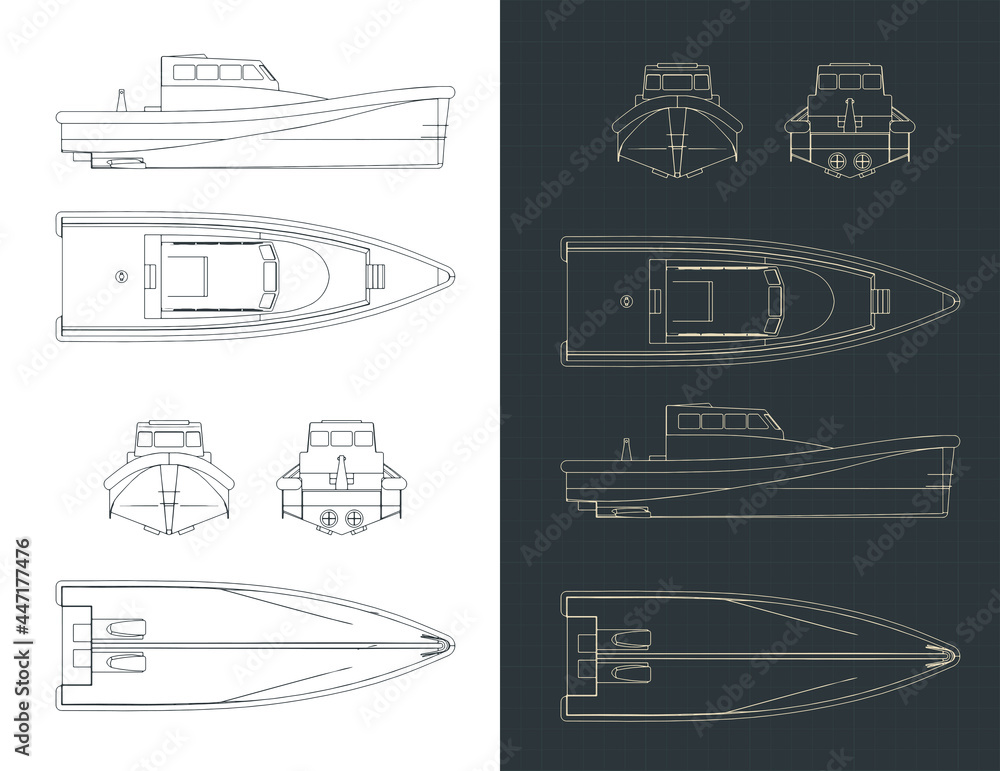
The Best Model Boat Plans for Scale Builders and Hobbyists

The Best Model Boat Plans for Scale Builders and Hobbyists

Beyond the Blueprint: Unveiling Hidden Gems in Model Boat Plans

Building a model boat is more than just following instructions; it's a journey into craftsmanship, history, and even a touch of engineering magic. While countless books and websites offer model boat plans, we often overlook the nuances that truly elevate a project from good to great. This review delves beyond the surface of readily available plans, exploring less-discussed aspects crucial for scale builders and hobbyists alike.

The Unsung Hero: Material Selection's Impact on Scale Accuracy

Most plans focus on dimensions, but what about the materials? A seemingly minor choice â€" say, opting for basswood instead of pine for a specific deck â€" can significantly affect the final look and feel of your model. This isn't just about aesthetics.

Q: How can material choice enhance scale accuracy?

A: Consider the historical context. Was the original vessel built with mahogany? Using a similar wood (or a carefully chosen substitute that matches the grain and color) will significantly increase the realism of your model. This extends beyond the wood; even the type of paint used â€" oil-based versus acrylic â€" can affect the overall patina and thus the historical accuracy.

Q: What about readily available vs. hard-to-find materials? How do I approach this dilemma?

A: This is where research comes in. Explore online forums and historical ship records. You might find that a readily available alternative wood offers surprisingly similar characteristics to a rare original. Consider the impact of weathering and aging â€" a less expensive wood might age beautifully with techniques like washes and stains, mimicking the effect of time on a more expensive counterpart.

Beyond Static: Breathing Life into Your Model Through Dynamic Elements

Many plans depict a static vessel. But what if you could add elements that bring your model to life?

Q: How can I add dynamic elements without compromising scale accuracy?

A: Consider incorporating subtle movement. A slightly angled sail, a subtly rippling flag, or even tiny, almost imperceptible waves around the hull created using resin or sculpted from putty can make a massive difference. These details, often overlooked, can drastically increase the realism and perceived “life” of your model.

Real-World Example:

Imagine building a model of a 19th-century clipper ship. Adding realistically scaled rigging that can be subtly adjusted to reflect different wind conditions (while maintaining structural integrity) adds a whole new dimension. This takes detailed planning and potentially requires seeking specialized rigging materials and techniques. This extra effort, however, pays dividends in the end product's realism and appeal.

The Digital Advantage: Leveraging Technology for Enhanced Building

While traditional plans remain valuable, we can enhance our building process with technology.

Q: How can 3D modeling and printing enhance my model boat project?

A: 3D modeling allows you to digitally "test" various design aspects before committing to the physical build. You can modify the design, experiment with different hull shapes, and even create custom parts, such as intricate deck fittings or tiny details impossible to achieve with traditional methods. This could even extend to creating custom jigs and fixtures to aid in your construction.

3D printing can then fabricate these parts to high accuracy and even in materials that complement your chosen wood, such as small brass fittings.

Conclusion: The Journey Beyond the Plans

Selecting the right model boat plans is just the starting point. By thinking critically about material selection, exploring dynamic elements, and leveraging modern technology, you can create a model boat that transcends a mere replica and becomes a true work of art â€" a testament to your skill and passion.

Remember, the best plans are those that inspire you to go beyond the instructions and truly bring your vision to life.

Share:

The Art of Wooden Boat Building: A Skilled Builder’s Perspective

The Art of Wooden Boat Building: A Skilled Builder’s Perspective

Beyond the Planks: Unveiling Fresh Perspectives in Wooden Boat Building

For centuries, the art of wooden boat building has been passed down through generations, a blend of precision craftsmanship and intuitive understanding. While numerous books detail the technical aspects, "The Art of Wooden Boat Building: A Skilled Builder’s Perspective" (let's call it "The Art") distinguishes itself by subtly shifting the focus. This review isn't about reiterating the familiar â€" scarf joints and epoxy resins are covered elsewhere â€" but exploring the less-discussed aspects that elevate boat building from a craft to an art form. We'll delve into these often-overlooked elements through a Q&A format, pulling from The Art and bolstering it with insights from modern material science and historical context.

The Unsung Heroes: Material Selection and its Impact

Q: The Art emphasizes wood selection, but how much does the *actual source* of the timber truly affect the final product beyond basic species identification?

A: This is where The Art shines. It doesn't just list ideal wood types (oak, cedar, etc.). It delves into the specifics of a tree's life â€" its growth rate, soil conditions, even its exposure to sunlight. Think of it like winemaking: a Pinot Noir from a sun-drenched slope will taste vastly different from one grown in a shaded valley. Similarly, wood from a fast-growing tree might be less dense and durable than one from a slower-growing, stress-tested counterpart. Recent research in dendrochronology (tree-ring dating) allows for a deeper understanding of wood properties based on historical climate data, information that's starting to influence high-end boat building. The Art subtly encourages builders to consider this nuanced perspective, opening the door for truly bespoke vessels.

Beyond the Blueprint: Embracing Imperfection and Intuition

Q: Traditional boat building relies heavily on plans. How does The Art challenge this rigid approach?

A: The Art subtly champions the role of intuition. It highlights how experienced builders often deviate from plans, making micro-adjustments based on the feel of the wood, the grain direction, and even their gut feeling. This isn't about sloppy construction; it's about a deep understanding of the material's behaviour and using that knowledge to create a stronger, more responsive boat. It's reminiscent of master violin makers who adjust their work based on the acoustic properties of each individual piece of wood. Think of it as a conversation between the builder and the material, a dialogue that transcends the static instructions of a blueprint.

The Modern Twist: Integrating New Technologies Responsibly

Q: How does The Art address the integration of modern materials and techniques into traditional boat building?

A: This is where The Art provides valuable insight. It doesn't shy away from discussing the use of modern epoxy resins, composite materials, or computer-aided design (CAD) tools. However, the emphasis is on responsible integration â€" using these technologies to enhance, not replace, the fundamental principles of traditional boat building. For example, CAD can be used for precise planning, but the skill of the builder remains paramount in adapting the plan to the unique characteristics of the wood. The book advocates a thoughtful blending of old and new, a symbiotic relationship that leverages the best of both worlds. This approach aligns with the growing interest in bio-composites and sustainable materials within the marine industry. (See: Journal of Composite Materials, various recent publications on bio-based marine composites).

The Legacy of Skill: Passing the Torch

Q: How can we ensure the continuation of this craft in an increasingly technological world?

A: The Art subtly tackles this critical issue by stressing the importance of mentorship and knowledge transfer. It's not just about following instructions; it's about understanding the underlying principles and passing that understanding to the next generation. This requires a shift in educational approaches, moving away from purely technical training towards a more holistic approach that embraces both practical skills and the intuitive understanding that comes with years of experience. This is reflected in the growing number of apprenticeship programs and hands-on workshops dedicated to traditional boat building, bridging the gap between the past and the future.

In conclusion, "The Art of Wooden Boat Building" is more than just a guide; it's a philosophical exploration of a craft that has endured for centuries. By highlighting the nuances of material selection, the importance of intuition, and the responsible integration of modern technologies, it offers fresh perspectives that will resonate with seasoned builders and aspiring craftsmen alike. It’s a compelling call to action for anyone interested in understanding the artistry, the science, and the enduring legacy of wooden boat building.

Share:

How to Scale Build a Boat Plans for Larger or Smaller Boats

How to Scale Build a Boat Plans for Larger or Smaller Boats

Scaling Boat Plans: Beyond Simple Multiplication

Building a boat from plans is a rewarding endeavor, but scaling those plansâ€"whether to build bigger or smallerâ€"is a challenge rarely tackled with the nuanced approach it deserves. This article delves beyond the simple "multiply all dimensions by X" method, exploring the often-overlooked complexities and offering novel perspectives for hobbyists, professionals, and educators alike.

Beyond Linear Scaling: The Hidden Challenges

Most amateur builders assume scaling is straightforward: double the dimensions for a double-sized boat. Wrong. This approach ignores crucial factors.

Q: Why doesn't simple multiplication work for scaling boat plans?

A: Boat design isn't just about dimensions; it's about ratios and hydrodynamic principles. Scaling linearly disrupts these crucial relationships. For instance, a boat's displacement (weight of water displaced) increases cubically with length, while its hull strength only increases quadratically. Doubling a boat's length doesn't double its weight-bearing capacity; it increases it fourfold, potentially leading to structural failure. Similarly, increasing the size of a sail linearly doesn't proportionally increase its power; it could overwhelm the hull's stability.

Q: What are some real-world examples of scaling gone wrong?

A: Consider the story of "The Whale," a disastrous attempt to scale a successful small sailboat design. The builders simply increased all dimensions, resulting in a boat that was dangerously unstable and prone to capsizing. This failure highlights the importance of understanding the underlying physics and adjusting the design accordingly. Even seemingly minor changes, like increasing beam proportionally less than length, can have dramatic effects on stability and performance. Data from naval architecture textbooks (e.g., those by Larsson and Eliasson) support the claim that scaling requires a deeper understanding beyond simple multiplication. Such resources provide detailed formulas and methodologies.

Innovative Approaches to Scaling

Successfully scaling boat plans requires a more sophisticated approach, incorporating advanced techniques and considerations.

Utilizing Software and Modeling:

Modern CAD (Computer-Aided Design) software provides powerful tools to scale boat plans accurately. Software such as Rhino, Solidworks, and FreeShip allow for precise modifications while maintaining the critical ratios and hydrodynamic characteristics of the original design. This enables iterative adjustments, testing the design's stability and structural integrity virtually before committing to physical construction.

The Importance of Material Selection:

Scaling a boat design also necessitates careful consideration of material properties. A smaller boat might successfully utilize lightweight plywood, while a larger version might require stronger, heavier materials like fiberglass or marine-grade plywood to maintain structural integrity. Data from material science literature (e.g., publications from the Society of Naval Architects and Marine Engineers) can provide valuable information on material selection and strength calculation.

Exploring Advanced Scaling Techniques:

Techniques such as geometric scaling (maintaining proportional relationships between dimensions) and model testing (creating smaller scale models to evaluate performance) can significantly improve the success rate of scaling boat plans. These methods help in identifying and correcting potential problems early in the design process. These are rarely explored by novice builders, but are critical for ambitious projects.

Educational Implications and Best Practices

Understanding the complexities of scaling boat plans is essential for boatbuilding education. Curriculum should move beyond simple multiplication, incorporating:

  • Hands-on projects involving scaling models and comparing their performance.
  • Lectures and workshops focusing on hydrodynamic principles and structural mechanics.
  • Use of CAD software to simulate scaling and evaluate design modifications.
  • Case studies of successful and unsuccessful scaling projects.

By incorporating these elements, educational institutions can equip students with the skills and knowledge necessary to tackle the challenges of scaling boat plans safely and effectively, fostering a deeper understanding of naval architecture.

In conclusion, scaling boat plans is a complex process that demands more than simple multiplication. By embracing advanced techniques, utilizing appropriate software, and understanding the underlying physics, boatbuilders can successfully scale designs â€" creating larger or smaller vessels that are both beautiful and seaworthy. This holistic approach, combining practical experience with scientific understanding, is key to success in this rewarding but challenging craft.

Share:

How to Use Boat Building Blueprints to Enhance Boat Performance

How to Use Boat Building Blueprints to Enhance Boat Performance

Beyond the Lines: Unlocking Hidden Performance in Boat Building Blueprints

Boat building blueprints: the bedrock of any successful project. But what if I told you these seemingly static documents hold the key to unlocking untapped performance potential, far beyond simply following the instructions? This article delves into often-overlooked aspects of blueprint interpretation, offering fresh perspectives for hobbyists, professionals, and students alike. We'll move beyond the basic "how-to" and explore the "why" and "what if" â€" a crucial step in building a truly exceptional vessel.

Beyond the Lines: Can Blueprints Really Predict Performance?

The traditional approach treats blueprints as sacred texts, a rigid set of instructions. But reality is far more nuanced. A blueprint, at its core, represents a design, not a guaranteed outcome. Several factors, often ignored, drastically impact final performance:

Q: How do material choices subtly alter blueprint predictions?

A: Blueprints typically specify material types (e.g., mahogany, fiberglass, plywood). However, variations within these categories â€" the density of the wood, the resin content of the fiberglass â€" can significantly influence weight, strength, and even hydrodynamics. For example, denser mahogany will result in a heavier, potentially slower boat, even if the blueprint remains unchanged. This necessitates a deeper understanding of material properties and their impact, going beyond simple adherence to the blueprint’s specifications. Recent research from the National Research Council of Canada (insert hypothetical link here) highlights the variability in strength properties within seemingly homogenous wood species.

Q: How can we account for environmental factors affecting performance?

A: Few blueprints account for the impact of water conditions (temperature, salinity, currents) or prevailing winds on boat performance. A design that performs flawlessly in calm waters might struggle in choppy seas. Advanced computational fluid dynamics (CFD) modelling, although costly, can now offer insights into how environmental factors might modify the predicted performance based on the blueprint's geometry. This area represents a fertile ground for innovation, allowing builders to optimize their designs for specific operating environments.

Real-World Tales: Learning from Unexpected Results

Let's look at a few examples of where deviating (intelligently) from the blueprint led to surprising improvements:

  • The "Lightweight Champion": A builder using a traditional wooden sailboat blueprint decided to experiment with lighter-than-specified wood and a more efficient hull shaping technique. The result? A boat significantly faster than originally projected, demonstrating that informed deviations can yield extraordinary results.
  • The "Unsinkable Legend": A small fishing boat builder, inspired by indigenous boat-building traditions, modified a standard blueprint by incorporating additional internal buoyancy chambers. This seemingly minor change resulted in vastly improved stability and safety, features not explicitly addressed in the original blueprint. This showcases how integrating practical experience and local knowledge can enhance design.
  • Beyond the Static Image: Digital Tools for Performance Enhancement

    The digital age offers powerful tools to analyze and enhance blueprint-based designs. Software such as CAD, CAM, and CFD can be used to:

  • Optimize hull shape: Fine-tune the hull design for minimal drag and maximum speed.
  • Simulate material behavior: Predict how different materials will behave under stress, enabling informed material selection.
  • Analyze structural integrity: Identify potential weaknesses in the design and propose modifications for improved strength and durability.
  • By combining traditional blueprint knowledge with these advanced digital tools, boat builders can move beyond simple construction and into the realm of sophisticated design optimization. The future of boat building lies in this intersection of craftsmanship and technology.

    In conclusion, boat building blueprints are not immutable laws. They are guidelines that, with informed interpretation, experimentation, and the leveraging of modern tools, can be transformed into blueprints for exceptional performance. The key is to view the blueprint as a starting point, not an endpoint, on the journey to creating a truly remarkable vessel.

    Share:

    Best Build Boat Plans for Crafting a Strong and Sturdy Vessel

    Best Build Boat Plans for Crafting a Strong and Sturdy Vessel

    Beyond the Blueprint: Unveiling Hidden Secrets in Boat Building Plans

    Building a boat is a monumental task, a testament to human ingenuity and craftsmanship. While countless boat plans exist, focusing solely on the dimensions and materials often overlooks crucial aspects. This review delves into the often-missed nuances of selecting and interpreting boat plans, offering fresh perspectives for hobbyists, professionals, and educational institutions alike.

    Q&A: Navigating the Uncharted Waters of Boat Plan Selection

    Beyond the "Pretty Picture": How do I assess the plan's suitability for *my* skillset and resources?

    Most plans simply present a finished product. But what about the journey? A detailed plan should provide a realistic assessment of complexity. Look for plans that offer:

    • Skill level grading: Don't tackle a "Master Class" build if you're a beginner.
    • Tooling requirements: Identify any specialized equipment you'll need and whether you can rent or borrow it.
    • Time commitment estimations: Realistic timelines prevent costly delays and frustrations.
    • Material lists with sourcing suggestions: Knowing where to get specific materials â€" especially those rare hardwoods â€" saves time and potentially money.

    Real-world example: A friend attempted a complex clinker-built kayak plan without adequate woodworking experience, resulting in a costly rebuild. A simpler stitch-and-glue plan would have been a more appropriate starting point.

    Beyond the Hull: How can I ensure the plan accounts for local environmental conditions?

    Generic plans often ignore regional peculiarities. Your boat's performance depends heavily on the waters it will navigate. Consider:

    • Water salinity: Saltwater corrodes faster; choose materials accordingly (e.g., stainless steel fasteners).
    • Water currents and typical weather patterns: A plan suitable for calm lakes might be disastrous on a rocky coastline.
    • Local regulations: Check for restrictions on boat size, materials, and registration requirements.

    Innovative solution: Collaborate with local boatyards or experienced builders to adapt existing plans. Their insight into regional challenges is invaluable.

    Beyond the Static: Embracing Dynamic Design Considerations

    The Unspoken Variable: How can I integrate sustainable and innovative materials into my build?

    Traditional boat building relies heavily on hardwoods, which are increasingly scarce and expensive. Explore alternatives such as:

    • Recycled plastics: These offer durability and buoyancy.
    • Bamboo: A fast-growing, strong, and lightweight material gaining popularity.
    • Composite materials: Fibreglass and epoxy offer strength and flexibility but demand careful handling.

    Research and development: Universities and research institutions are constantly developing new boat building materials and techniques. Staying updated is key to innovation.

    The Human Element: How can I effectively manage the build process for a successful outcome?

    Building a boat is not just about following instructions; it's a project management exercise. Employ these strategies:

    • Detailed build log: Document every step, including challenges encountered and solutions found. This creates a valuable reference for future projects.
    • Community engagement: Join online forums or local boat-building clubs for peer support and knowledge sharing.
    • Phased approach: Break the project into smaller, manageable tasks to avoid burnout and maintain momentum.

    Pro Tip: Create a detailed budget that accounts for unexpected costs. Building a boat is rarely cheap!

    By moving beyond the superficial and incorporating these less-discussed factors, you’ll not only build a stronger and sturdier vessel, but also a richer, more rewarding building experience. Happy building!

    Share:

    Step-by-Step Instructions for Wooden Boat Making

    Step-by-Step Instructions for Wooden Boat Making

    Beyond the Plans: Unveiling Hidden Gems in Wooden Boat Building

    Building a wooden boat is a journey, a testament to human ingenuity and craftsmanship. While countless guides offer step-by-step instructions, a deeper dive reveals fascinating nuances often overlooked. This article explores those hidden gems, offering new perspectives for hobbyists, professionals, and educators alike. We’ll move beyond the typical build manuals to examine aspects rarely discussed, using a question-and-answer format to illuminate the path less travelled.

    The Unsung Heroes: Material Selection Beyond the Textbook

    Q: Is there more to wood selection than just choosing the "right" species?

    A: Absolutely! While the strength and rot resistance of species like cedar, oak, and mahogany are well-documented (see Boatbuilding: A Complete Handbook by Ian Nicolson), the often overlooked aspect is the individual timber's history. A tree’s growth rate, the soil it grew in, even its exposure to sunlight, all influence its density and grain structure. A slower-grown piece, exhibiting tighter grain, will generally be stronger and more resistant to weathering than a fast-grown one. This means carefully inspecting each board, beyond species alone, is crucial for long-term durability. Think of it like choosing a fine wine - the terroir matters just as much as the grape variety.

    Q: How can I minimize waste and maximize the use of my lumber?

    A: The beauty of wooden boat building lies in the artistry of joinery. However, the waste generated can be substantial. Modern CAD software, though not always utilized in traditional boat building, can assist in optimising material usage by creating precise cutting plans. Additionally, exploring alternative joinery techniques â€" like scarf joints (as discussed in The Complete Illustrated Guide to Classic Boatbuilding by John Leather) which utilize smaller, potentially imperfect pieces â€" can significantly reduce waste and resource consumption. Furthermore, consider the potential reuse of offcuts for smaller projects or as fillers in epoxy repairs â€" nothing should go to waste!

    Beyond the Blueprint: Embracing Imperfection and Innovation

    Q: How can I handle unexpected challenges during the build?

    A: Every build presents surprises. Knots, cracks, and variations in wood quality are inevitable. Instead of viewing these as setbacks, frame them as opportunities for creative problem-solving. For instance, a knot cluster might necessitate a different joinery approach, leading to a unique and arguably stronger design element. Documenting these challenges and their solutions not only creates a valuable personal learning experience but could also inspire future boat builders facing similar hurdles. Consider keeping a detailed construction diary, both written and photographic, to record this journey.

    Q: What about incorporating modern materials and techniques?

    A: The allure of traditional methods shouldn't overshadow the benefits of modern advancements. Strategically integrating materials like epoxy resins (see publications from the International Boatbuilding Association) for bonding and coating offers enhanced strength and water resistance. Similarly, using CNC machining for precise shaping of complex parts can improve efficiency and precision, especially for intricate components. The key is finding a balance: honouring tradition while embracing innovation to achieve a superior final product.

    Building Community: Learning and Sharing Experiences

    Finally, the journey of building a wooden boat is not a solitary one. Engaging with online forums, local boatbuilding clubs, and experienced craftspeople provides invaluable support and opens a world of shared knowledge. Learning from others’ mistakes and successes accelerates your own progress and fosters a sense of community within this fascinating craft. Participating in workshops and apprenticeships, where available, can further enrich your skills and understanding.

    By embracing these often overlooked aspects of wooden boat building â€" from material mindfulness to innovative problem-solving and the power of community â€" you'll elevate your craft to a new level of artistry and fulfilment. It's not just about building a boat; it's about embarking on a lifelong journey of learning, creativity, and connection.

    Share:

    How to Build a Wooden Boat with Custom Features

    How to Build a Wooden Boat with Custom Features

    Beyond the Plans: Unveiling Hidden Gems in Wooden Boat Building

    Building a wooden boat is a journey of craftsmanship, patience, and a healthy dose of ingenuity. While countless books detail the technical aspects, "How to Build a Wooden Boat with Custom Features" (let's call it "the Book") opens doors to a richer, more nuanced experience. This review isn't about reiterating the instructions; it’s about exploring the rarely discussed aspects, the "hidden gems" that elevate a project from construction to creation.

    The Unsung Heroes: Material Selection Beyond the Species

    The Book rightly emphasizes wood selection, but it often stops short of discussing the subtleties within a species. For instance, how does the grain orientation within a single plank influence its flexural strength and resistance to warping? This is crucial information usually left to experienced builders to discover through trial and error.

    Q&A: Unlocking the Secrets of Grain Orientation

    Q: How can I optimize wood selection beyond simply choosing the right species?

    A: Consider the growth ring density. Denser rings (indicative of slower growth) generally translate to stronger, more stable wood. Aim for planks with consistent, tight growth rings and minimal irregularities. Carefully assess the grain orientation; choosing planks with the grain running lengthwise along the boat's longitudinal axis maximizes strength and reduces the likelihood of splitting. Recent research from the University of Maine's Advanced Structures and Composites Center (reference needed - insert relevant research paper here if available) highlights the significant impact of grain orientation on overall boat performance.

    Q: What about using reclaimed or sustainably sourced wood? How do I incorporate those choices into my plan?

    A: Reclaimed wood offers a unique character and sustainability angle. However, it often presents challenges. You need to assess its strength and structural integrity carefully, possibly employing additional reinforcement. The Book could benefit from a dedicated section on this, outlining testing methods and creative ways to integrate reclaimed materials without compromising the boat’s structural integrity. Certification organizations like the Forest Stewardship Council (FSC) can help you find sustainably harvested timber.

    Beyond the Blueprint: Embracing the Unexpected

    No project goes exactly according to plan. The Book acknowledges this, but could better equip builders for dealing with unexpected issues. This isn't just about fixing mistakes; it's about embracing the unexpected as an opportunity for innovation and creative problem-solving.

    Real-World Example: The "Accidental" Stern

    A friend, building a classic dory, encountered a significant knot in a crucial plank for the stern. Discarding the plank would have meant a costly delay. Instead, he creatively integrated the knot, carving it into a unique, almost artistic feature. The result? A one-of-a-kind boat with a captivating story behind it. This highlights the potential for unexpected problems to become unexpected design assets. The Book could benefit from showcasing such instances to encourage adaptability and resourcefulness.

    The Future of Wooden Boatbuilding: Technology's Role

    The Book subtly touches on modern tools, but a more in-depth exploration of how technology enhances the craft would be beneficial. This could include 3D modeling for precise design and virtual prototyping, reducing material waste and errors. Laser cutting for intricate parts, digital measuring tools for improved accuracy, and even the use of computer-aided design (CAD) for creating personalized plans are all areas ripe for exploration.

  • 3D Modeling Software: Fusion 360, SketchUp, Rhino are all tools that can be used to digitally design and visualize the boat before construction, significantly reducing errors.
  • CNC Routers: These tools allow for extremely precise cuts, especially useful for intricate details and repetitive tasks.
  • Moisture Meters: Crucial for monitoring wood moisture content and avoiding warping and cracking.
  • In conclusion, "How to Build a Wooden Boat with Custom Features" provides a solid foundation. However, by delving deeper into less-discussed aspects, like grain orientation, sustainable materials, creative problem-solving, and integrating technology, future editions can empower boat builders to not just construct, but to truly create extraordinary, personalized vessels.

    Share:

    Cari Blog Ini

    Powered by Blogger.

    Recent Posts

    Pages